How to Save Money on Footwear in India: 6 Smart Ways

Quick Answer
To save money on footwear, consider buying the previous model when a new version launches, as the differences between consecutive releases are often minor. For formal or leather shoes, check whether the sole can be repaired or resoled, and use a cobbler for small fixes instead of replacing the entire pair. Replace running shoes based on mileage and condition rather than appearance alone, shop at the end of the season for better prices, and protect footwear from water and improper drying to extend its life. When buying a new pair, combine sale prices, eligible coupons and cashback through CashKaro for additional savings.
Footwear is a regular expense, but how much you spend depends on more than just the price of a new pair. Buying at the right time, choosing shoes that can last longer, repairing minor damage and taking proper care of what you already own can all reduce replacement costs.
A few practical buying and maintenance habits can make a noticeable difference to your overall footwear budget without compromising on comfort or everyday use.
Below are six simple ways to save money on shoes and footwear in India.
6 Tips to Save Money on Footwear in India
Buy the Previous Model Instead of the Latest Release

Athletic footwear follows a predictable launch cycle. When a brand releases a new version of a running or training shoe, the outgoing model is usually discounted even though it may still offer very similar performance.
Changes between consecutive versions are often limited to a redesigned upper, new colourways or small adjustments to the midsole. For most recreational runners and casual users, buying the previous model can provide better value without significantly changing the experience.
Where this saves the most: Running shoes are replaced more frequently than most footwear, so even a modest discount can add up over time. Someone running 20 km a week may go through roughly 1.6 pairs a year. At ₹8,000 per pair, that works out to ₹12,800 annually. Buying the previous model at 40% off reduces the cost to ₹7,680, saving around ₹5,120 a year.
How to find older models: Search for the same shoe one version below the latest release. Previous-generation stock often remains available in marketplace clearance sections after the brand has moved on to the newer model. Flipkart Fashion, Myntra and Shopsy are useful places to compare older athletic stock.
One thing to check: Make sure the newer version has not introduced a major change in fit, width or shape. If the fit remains similar, the previous model can simply be the more affordable choice.
Buy Repairable Shoes or Repair Them Instead of Replacing Them
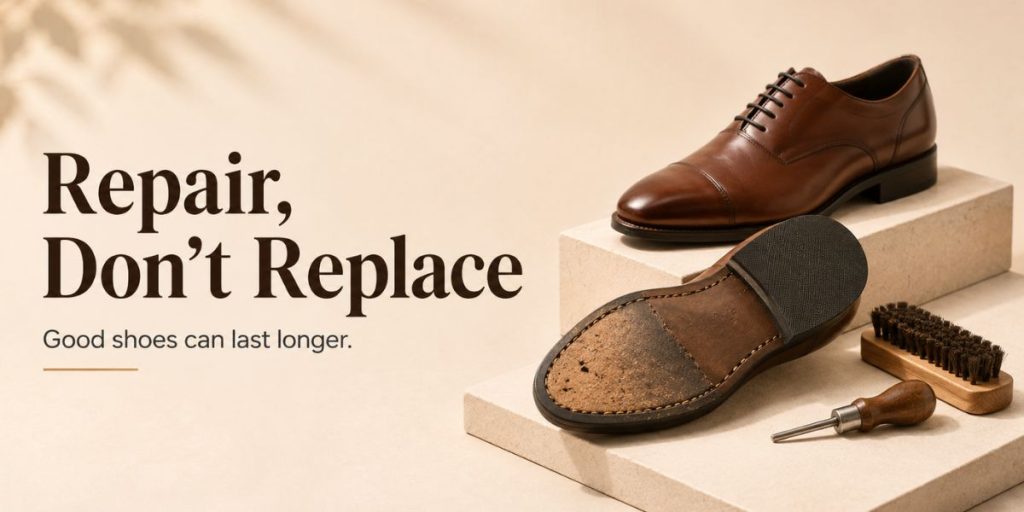
The purchase price alone does not tell you what a pair of shoes will ultimately cost. Repairability can make a much bigger difference over several years.
Check how the sole is attached: Look at the area where the sole meets the upper. Shoes with stitched construction are generally easier to resole or repair, while many glued constructions have fewer repair options once the sole wears out.
| Construction | Price | Realistic Life | 10-Year Cost | Cost Per Year |
| Glued sole | ₹2,000 | About 18 months | ₹13,333 | ₹1,333 |
| Glued sole | ₹4,000 | About 2 years | ₹20,000 | ₹2,000 |
| Stitched leather | ₹6,000 | 10 years with two resoles | ₹7,600 | ₹760 |
| Goodyear welted | ₹12,000 | 15 years with three resoles | ₹15,600 | ₹1,560 |
The key comparison is between the ₹4,000 glued pair and the ₹6,000 stitched pair. The first works out to around ₹2,000 a year, while the stitched pair comes to about ₹760 a year because it can be repaired instead of replaced.
Use local repair services: India has a strong cobbler network, and many common footwear problems can be repaired for far less than the cost of buying a new pair.
Consider repairing:
- Worn-down heels
- Separating soles
- Split seams
- Flattened or worn insoles
Fixing small problems early also prevents them from becoming larger and more expensive to repair.
Where glued footwear still makes sense: Lightweight sneakers and casual footwear that you expect to wear out rather than maintain for many years can still be perfectly practical. Neemans, for example, focuses on lightweight everyday footwear rather than long-term resoleable construction.
Where repairability matters most: Formal leather shoes and boots are better candidates for stitched construction because resoling can significantly reduce their lifetime cost. Tata CLiQ is useful for comparing formal and premium footwear, while Bacca Bucci is worth checking for boots and leather casuals.
Replace Running Shoes Based on Usage, Not Appearance
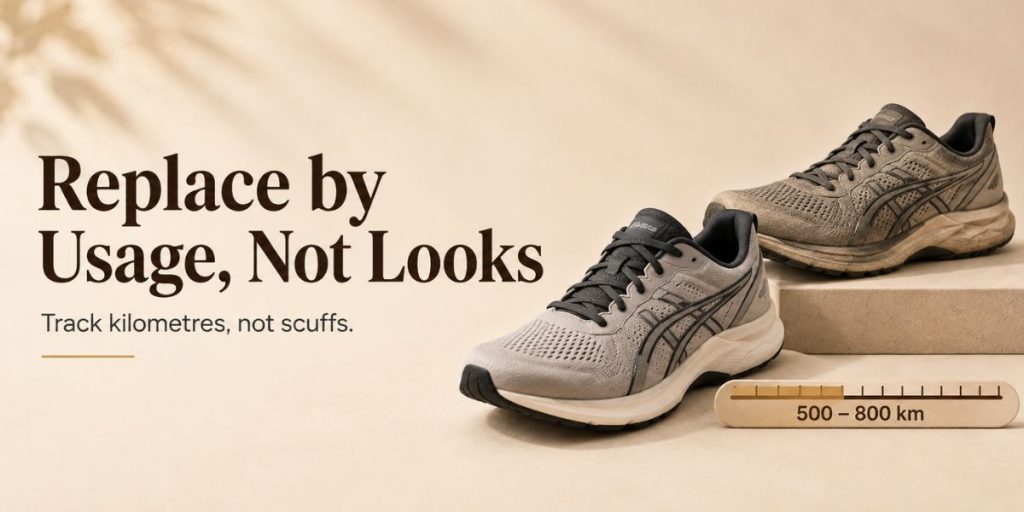
Running shoes can become expensive if you replace them too early, but continuing to use them for too long can also be a false saving.
The cushioning in a running shoe has a limited working life, typically around 500 to 800 km, depending on factors such as the shoe, body weight and running style. The upper may still look good even after the midsole has lost much of its cushioning.
Track kilometres instead of judging the shoe by looks: Most running apps allow you to assign a shoe to your runs and automatically track how much distance you have covered in it. This gives you a more useful replacement guide than scratches, dirt or faded colours.
The opposite mistake is replacing a shoe simply because it looks worn. A pair with scuffed uppers but relatively low mileage may still have plenty of usable life left.
Tracking mileage helps you avoid both forms of unnecessary spending: replacing shoes prematurely and continuing to use footwear well beyond its intended running life.
For affordable running and walking shoes, Decathlon is worth comparing, while Hummel offers sports footwear alongside cashback through CashKaro.
Buy at the End of the Season, Not at the Start

Footwear prices often follow seasonal sale cycles, so timing a non-urgent purchase can reduce what you pay for the same pair.
| Period | What to Expect |
| January to February | End-of-season clearance on winter stock |
| June to July | Second end-of-season sale clearing summer stock |
| October to November | Festive sales across major platforms |
Buy after the season rather than before it: Boots and closed footwear can become cheaper as winter ends, while sandals and open footwear may be discounted when summer stock is cleared.
For adults, footwear can also be easier to buy ahead than many clothing categories because shoe size is generally more stable. If you already know the fit and style you need, buying next season’s footwear during clearance can help avoid paying full price later.
Compare the final price, not the advertised discount: A ₹6,000 pair at 60% off costs ₹2,400. A suitable ₹2,800 pair with a smaller discount may still be cheaper. The percentage matters less than the amount that actually leaves your account.
A JIO is useful for clearance-led shopping, while Amazon Clothing can be worth checking for the same models during major sale periods.
Protect Shoes From the First Wear to Delay Replacement
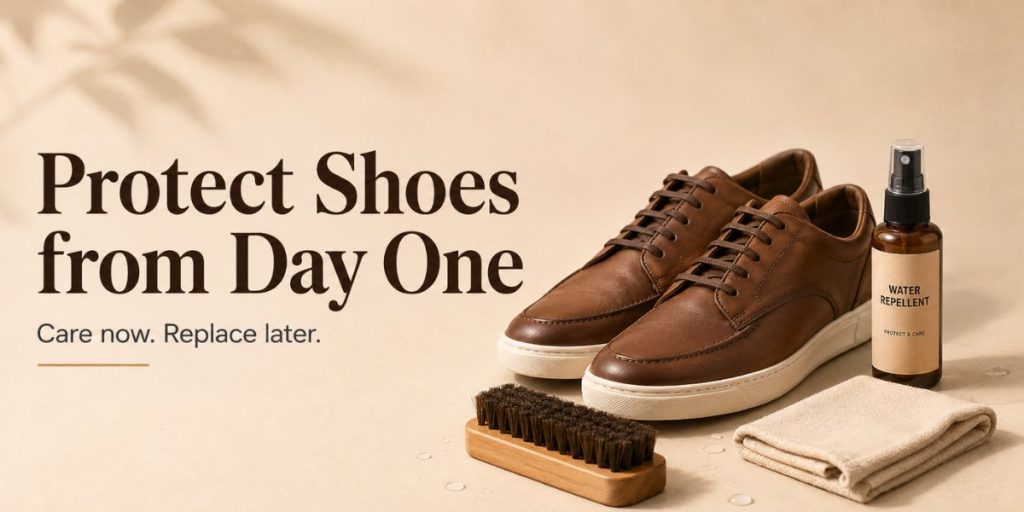
Making shoes last longer is one of the simplest ways to reduce footwear spending because every extra month of use delays the next purchase.
In Indian conditions, moisture, monsoon exposure and improper drying can shorten the life of footwear considerably.
Protect against water: Repeated soaking can damage leather and weaken glued construction. A suitable water-repellent treatment used before the monsoon can help reduce moisture damage on compatible footwear.
Dry wet shoes properly: Avoid placing wet shoes in strong direct sunlight or next to a heater. Instead, remove excess moisture, stuff them with newspaper if appropriate, and allow them to dry naturally in the shade.
Rotate frequently used pairs: Wearing the same pair every day gives leather, lining and foam less time to dry between uses. Alternating between two pairs allows each one more time to air out and recover.
Replace small components rather than the entire shoe: Insoles, heel caps and other worn parts can often be replaced for much less than a new pair.
Clean before storing: Dirt, moisture and salt left on footwear for long periods can cause deterioration. Cleaning and drying shoes before seasonal storage can help preserve them for the next time you need them.
The aim is not to spend heavily on shoe-care products. It is to use a few inexpensive maintenance habits to postpone a much larger replacement expense.
Stack the Sale Price, Coupon and Cashback
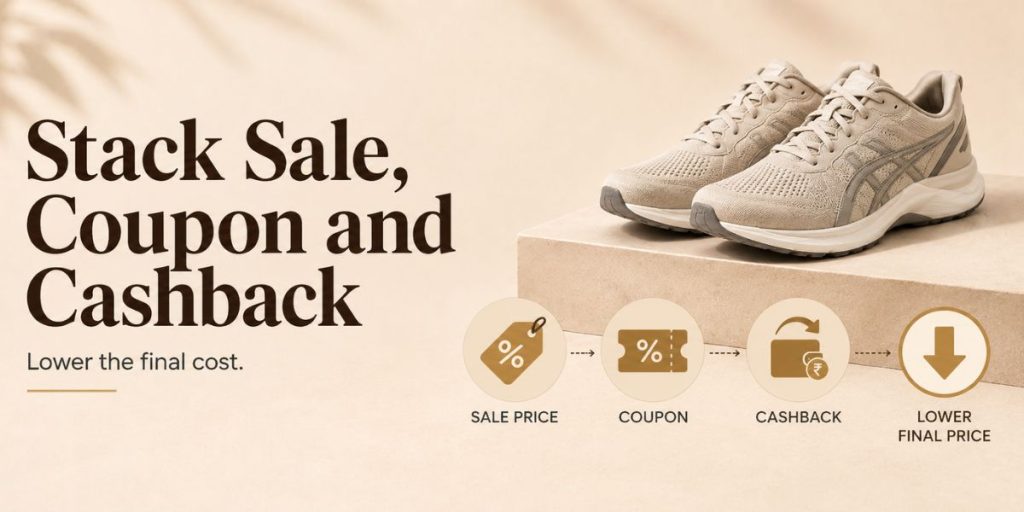
Once you have found the pair you actually need, reduce the effective cost by combining eligible savings rather than relying on a single discount.
A sale reduces the listed price, a coupon can lower the checkout value further, and cashback may return an additional amount after the eligible purchase is tracked and confirmed.
| Step | Amount |
| Listed price | ₹5,000 |
| Sale price at 40% off | ₹3,000 |
| After a ₹300 coupon | ₹2,700 |
| After 7.5% cashback through CashKaro | ₹2,498 |
That brings the effective saving to approximately ₹2,502, or 50%, in this example.
| Store | Best For | Footwear Cashback |
| Tata CLiQ | Formal, leather and premium brands | 7.5% on footwear |
| Hummel | Sports footwear and training shoes | Flat 25% |
| AJIO | Clearance events | Up to 7% |
| Flipkart Fashion | Budget and mid-range footwear, outgoing models | Check store page |
| Myntra | Broad brand selection and EORS shopping | Up to 6% |
| Amazon Clothing | Wide footwear selection and size options | Up to 5% |
| Shopsy | Budget and everyday footwear | Check store page |
| Neemans | Lightweight everyday footwear | Check store page |
| Bacca Bucci | Boots, sneakers and leather casuals | Check store page |
| Decathlon | Running, walking and sport-specific shoes | Up to 2.5% for new users |
Check the latest cashback rate and terms before purchasing, since rates, eligible categories and coupon conditions can change.
Also follow the tracking conditions: start your shopping journey through the relevant CashKaro store page and use eligible coupon codes so the order can be tracked correctly.
Do not increase the cart just to unlock a discount: If you need a ₹3,000 pair but add another ₹2,000 pair merely to qualify for a ₹400 offer, you have spent ₹1,600 more overall.
The best saving is always one applied to a pair you were already planning to buy.
Conclusion
Saving money on footwear is not only about finding the biggest discount. It also comes down to choosing pairs that last, repairing them when possible, buying at the right time and taking proper care of them.
For formal and leather shoes, one simple check can make a big difference: look at how the sole is attached. If the construction allows resoling or repair, a cobbler can often extend the life of the pair for far less than the cost of replacing it.
Combine that with end-of-season buying, previous-model discounts, proper maintenance and cashback or coupon savings, and your overall footwear spend can come down significantly over time.
FAQS
How can I save money on shoes in India?
Buy previous-season models, shop during clearance sales, repair shoes where possible and combine eligible coupons with cashback.
Is it worth buying last year’s running shoe model?
Yes, previous-generation running shoes can offer similar performance at a lower price, provided the fit and key specifications still suit you.
How long do running shoes usually last?
Most running shoes last roughly 500–800 km, although actual lifespan depends on the shoe, running surface, gait and usage.
How do I know when my running shoes need replacing?
Track mileage and watch for reduced cushioning, worn-out soles, changes in fit or noticeable deterioration rather than replacing them only because they look old.
Is it cheaper to repair shoes than replace them?
Yes, repairing worn heels, soles, seams or insoles can cost considerably less than replacing an otherwise usable pair.
Can all shoes be resoled?
No, stitched and repair-friendly constructions are generally easier to resole, while many glued shoes offer fewer repair options once the sole wears out.