8 Energy-Saving Tips for Your Washing Machine in India

Quick Answer
To save more on washing machine use, reduce the electricity and water you consume first, then use CashKaro when it is time to replace the appliance. Wash in cold water where suitable, run full loads, use Eco mode when timing is flexible, and choose the highest spin speed your fabric allows. Keep the filter clean, descale in hard-water areas, and use only the detergent quantity you need to avoid unnecessary rinse cycles. If your electricity connection has time-of-day tariffs, run the machine during cheaper hours. When replacement is genuinely necessary, compare sale prices, eligible coupons and cashback through CashKaro to reduce the purchase cost of a new washing machine.
Washing machines make everyday laundry easier, but they also add to household electricity and water use. The good news is that reducing these costs does not require major changes. A few practical habits can help improve efficiency and reduce running costs over time.
Here are some simple ways to save energy while using a washing machine in India.
8 Energy-Saving Tips for Your Washing Machine
Use Cheaper Electricity Hours Only If Your Tariff Has Them

Running a washing machine at night does not automatically reduce your electricity bill.
The saving applies only if your electricity connection uses Time-of-Day or Time-of-Use pricing and the machine is run during a lower-priced period.
Check your electricity bill, DISCOM website or smart-meter app to see whether different rates apply at different times.
Under India’s Time-of-Day framework, the cheaper period is not necessarily overnight. State commissions determine the applicable time blocks, and solar-hour tariffs can be lower than normal tariffs. Therefore, follow the tariff schedule for your own connection rather than assuming that “after 10 PM” is always cheaper.
If your connection has a flat electricity rate throughout the day, shifting the same wash from afternoon to night will not reduce its electricity cost.
Replace an Old Machine Only When the Numbers Make Sense
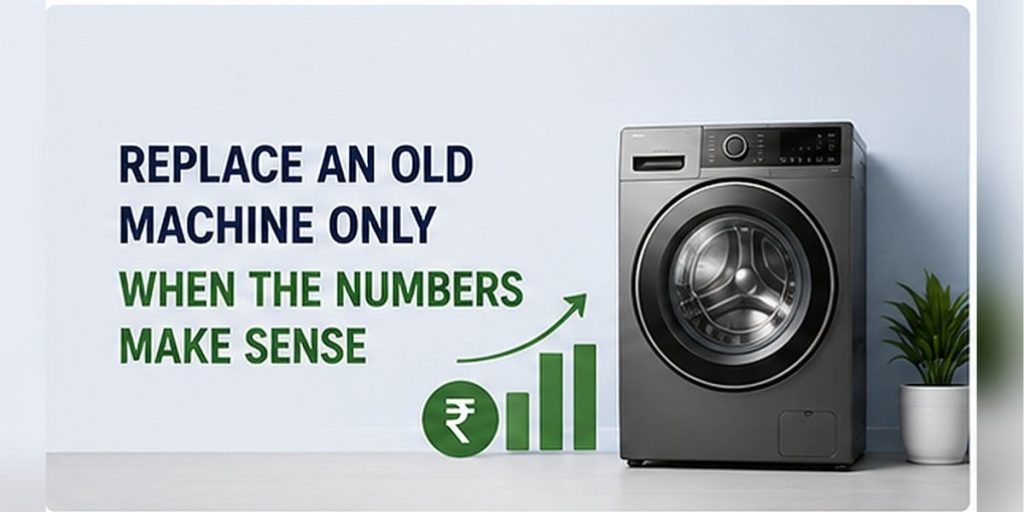
A more efficient washing machine can use less electricity and water, but replacing a functioning machine purely to reduce a relatively small annual electricity bill may not recover the purchase cost quickly.
Before replacing, consider:
- The age and condition of your current machine
- How frequently it needs repairs
- Its electricity and water consumption
- The cost of the replacement
- How frequently you wash
- Whether you are changing machine type or capacity
When comparing new models, use the BEE star label and energy-consumption information as comparison tools rather than assuming every 5-star machine will have the same running cost.
Washing machines are currently included in BEE’s voluntary Standards & Labelling programme. BEE’s published washing-machine schedule evaluates energy performance under standardised test programmes, so actual household consumption will still vary according to the programme, temperature, load and frequency of use.
If replacement already makes financial sense, compare prices during major appliance sale periods and check available cashback before purchasing. Reliance Digital, Croma, Amazon and Flipkart are useful places to compare appliance deals and enjoy extra cashback via CashKaro.
For savings across other household appliances, read our guide on how to save on your electricity bill.
Wash in Cold or Lower-Temperature Water

Heating water can account for a large share of the electricity used by a washing machine with an in-built heater. For everyday laundry, lowering the temperature is therefore one of the most effective ways to reduce power consumption.
Modern detergents are generally designed to work at lower temperatures, so everyday sweat, dust and lightly soiled clothes usually do not require a hot cycle.
Use hotter cycles only when they are genuinely required: Heavily soiled laundry, certain towels or bedding, and loads that need a higher-temperature wash for hygiene reasons may still require heat. Follow the garment-care label and your machine’s recommended programme.
If your machine does not heat water: This tip will have little or no effect on the machine’s electricity use because it is already washing with the temperature of the incoming water.
The important saving is not simply choosing a button marked “cold”. It comes from avoiding unnecessary water heating.
Wait for a Reasonably Full Load

Running several small loads generally uses more electricity and water than combining them into fewer properly filled washes.
A washing machine still has to fill, agitate, rinse, spin and drain regardless of whether the drum contains a few garments or a more efficient load. Waiting until you have enough clothes for a normal wash reduces the number of cycles you run over the year.
Do not overload the drum: A full load does not mean packing clothes tightly to the top. Clothes need enough room to move so that detergent and water can circulate properly. Overloading can reduce cleaning performance and may lead to another wash, wiping out the savings.
For machines with adjustable water levels: Match the water level to the actual load instead of automatically selecting the maximum.
This tip saves both electricity and water, making it particularly useful for households that currently run frequent small loads.
Use Eco Mode for Everyday Laundry
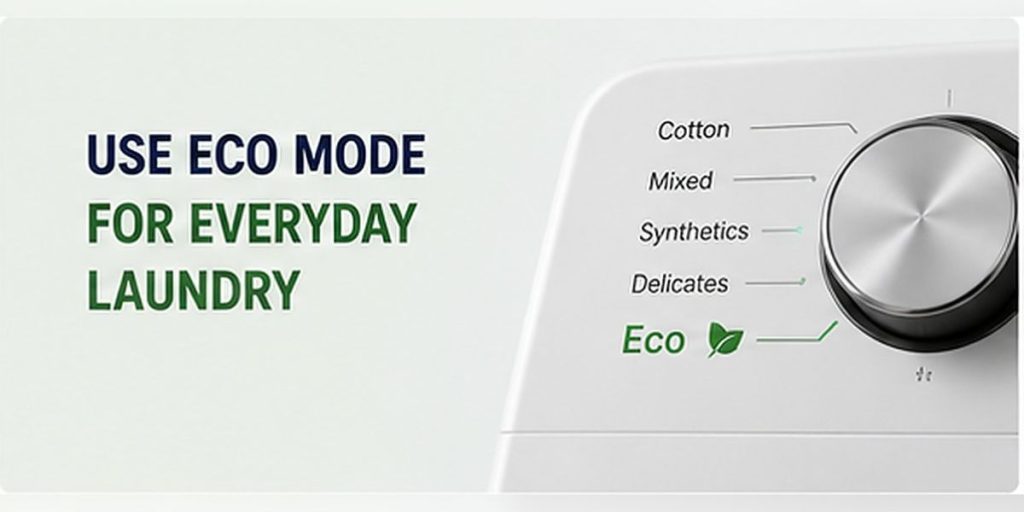
Eco mode is designed to reduce energy and water consumption, although the cycle often takes longer than a standard wash.
The longer runtime can seem inefficient, but Eco programmes typically compensate by using lower temperatures, less water or more gradual washing action. In other words, a longer cycle does not automatically mean higher electricity consumption.
Use Eco mode for normal loads when you are not in a hurry: It is particularly useful for everyday clothing that does not need an intensive wash.
Use Quick Wash selectively: A short cycle can make sense for a small, lightly soiled load, but it should not automatically replace the normal or Eco programme for every wash. Energy and water consumption vary by machine and programme, so compare the cycle information in your manual rather than assuming that either the shortest or longest programme is always cheaper.
The best setting is the lowest-resource cycle that still cleans the load properly the first time.
Use the Right Spin Speed and Air-Dry Where Possible
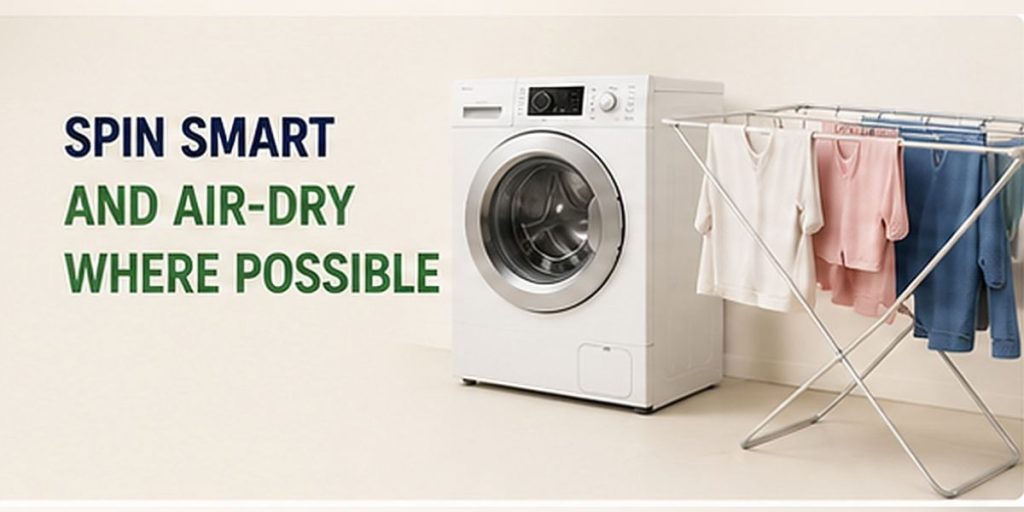
A faster final spin removes more water from clothes before the cycle ends, which can reduce drying time considerably.
For Indian households that line-dry clothes, this is particularly useful during humid or monsoon weather. If you use a tumble dryer or a washing machine with a heated drying function, removing more moisture during the spin can also reduce the energy required for drying.
Use higher spin speeds only where the fabric allows: Cotton, towels and many everyday fabrics generally tolerate higher speeds, while delicate garments, woollens and clothes containing a high amount of elastane may require gentler settings. Always check the care label.
Air-dry whenever practical: The SERP repeatedly recommends avoiding heated drying where possible because line drying or using a drying rack consumes no additional electricity.
For most Indian households, the saving here comes less from the spin itself and more from avoiding or shortening energy-intensive drying.
Keep the Machine Clean and Descale Where Necessary
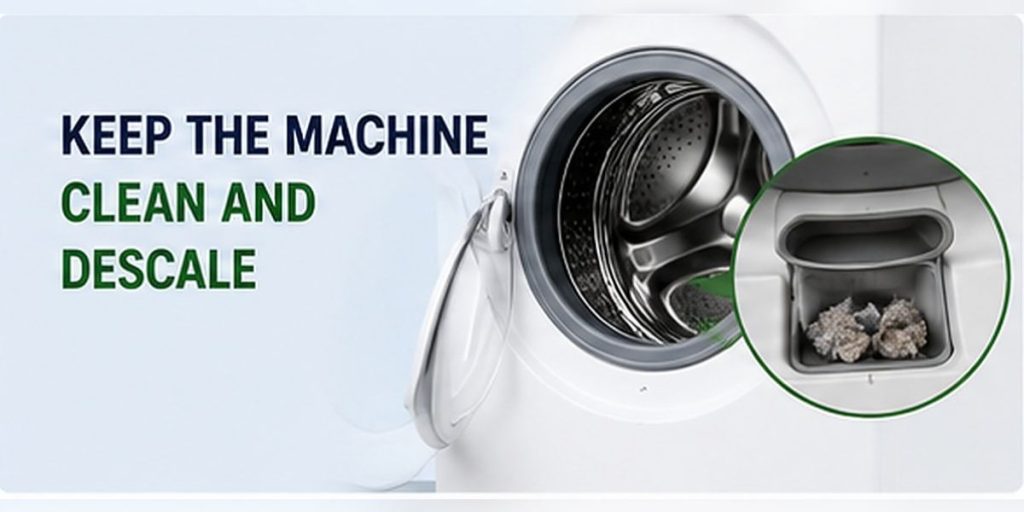
Regular maintenance helps the washing machine operate as intended and can also prevent problems that lead to longer cycles, poor cleaning or unnecessary service calls.
Clean the drain filter: Lint, hair, coins and other debris can collect in the filter and interfere with drainage. Check it regularly and clean it according to the manufacturer’s instructions.
Check the inlet filter or mesh: Restricted water flow can slow filling and affect how the machine operates.
Descale in hard-water areas: Mineral deposits can build up inside the machine and, in models with heaters, around the heating element. Use a descaling product and frequency recommended by the manufacturer rather than waiting until heavy deposits have formed.
Let the machine dry after washing: Where the manufacturer recommends it, leave the door or lid and detergent drawer open for a while after a cycle to allow moisture to escape and reduce odour or mould build-up.
Maintenance does not usually produce a dramatic saving on a single electricity bill. Its value comes from keeping the machine running efficiently and reducing unnecessary rewashes, repairs and premature replacement.
Use the Right Amount of Detergent

More detergent does not necessarily mean cleaner clothes.
Using too much detergent can create excess suds and leave residue on clothes or inside the machine. Some machines may respond with additional rinsing, while residue can also encourage users to run another rinse or wash.
Follow the detergent dose for your load size, water hardness and product type instead of filling the cap to the same level for every wash.
Do not judge cleaning performance by the amount of foam. Many modern detergents are designed to clean effectively without producing large amounts of lather.
At the same time, do not deliberately under-dose simply to save detergent. If the clothes do not come clean and need to be washed again, you spend more on water, electricity and detergent.
The cheapest dose is the amount that gets the load clean in one cycle.
Conclusion

Saving energy with a washing machine does not require major changes to your routine. Small adjustments to wash temperature, load size, cycle selection and maintenance can reduce electricity and water use over time.
Start with the changes that are easiest to maintain, such as using suitable wash settings, running efficient loads and keeping the machine clean. These simple steps can lower running costs without affecting everyday convenience or cleaning performance.
When the machine eventually needs replacing, compare energy efficiency, price, available offers and cashback so you can save on both the purchase and long-term usage.
Frequently Asked Questions
How can I reduce my washing machine electricity bill?
Use lower wash temperatures where the machine heats water, run efficient loads, choose Eco mode where suitable and avoid unnecessary repeat washes.
Does washing clothes in cold water save electricity?
Yes, if your machine normally heats the water; machines that use unheated inlet water will see little or no electricity saving from changing temperature.
Is Eco mode cheaper to run on a washing machine?
Usually, Eco mode is designed to reduce energy and water use by using lower-resource settings over a longer cycle.
Why does Eco mode take longer than a normal wash?
Eco programmes often use less heat or water and compensate with a longer washing time to achieve the required cleaning performance.
Is Quick Wash more energy-efficient than Eco mode?
Not necessarily; Quick Wash is best for small, lightly soiled loads, while Eco mode is generally designed specifically to minimise energy and water consumption.
Is one full washing-machine load cheaper than two half loads?
Generally yes, provided the drum is not overloaded, because fewer complete wash cycles use less electricity and water overall.