10 Best Groundnut Oil Brands in India for Delicious Recipes

Dalda performed best among the refined groundnut oils in independent testing, while Gemini and Fresh & Pure led the filtered category. For high-heat cooking and frying, refined or filtered groundnut oil is generally the better choice, while cold-pressed oil is better suited to tadka, sautéing and lower-heat cooking.
In terms of price, filtered groundnut oil usually costs around ₹170 to ₹240 per litre, while cold-pressed options can range from ₹350 to ₹600 per litre. Since cooking oil is a regular household purchase, using CashKaro while shopping on Amazon can also help you earn eligible Cashback over time.
Groundnut oil is a staple in many Indian kitchens, but not every bottle suits every kind of cooking. How the oil is processed, whether refined, filtered or cold-pressed, changes how it handles heat, how it tastes and how long it keeps.
This guide covers 10 brands worth considering, drawing on Consumer VOICE’s laboratory test of 12 popular brands (first published in 2020). It explains what the results mean in practice, so you can pick the right oil for frying, everyday cooking or tadka, which may mean keeping more than one bottle.
Groundnut Oil Brands Compared
| Brand | Type | Independent Test Result | Best For |
| Dalda | Refined | 1st refined, 1st sensory, highest saturated fat | Best-tested refined oil, taste |
| Gemini | Filtered | Joint 1st filtered | Unrefined character at a fair price |
| Fresh & Pure | Filtered | Joint 1st filtered | Lab-tested filtered oil |
| Nature Fresh | Refined | 2nd refined, best moisture | Widely available refined oil |
| Fortune | Filtered and cold-pressed | Tested, market leader | Consistency and availability |
| Dhara | Filtered | Tested, highest MUFA in sunflower test | Fortified, NDDB brand |
| Postman | Refined | Highest PUFA, best moisture | PUFA content, Western India |
| Gulab | Filtered | Lowest saturated fat | Lowest saturated fat, Gujarat |
| Gagan | Refined | 3rd refined, 2nd sensory | Taste quality, Bunge alternative |
| Patanjali | Kachi ghani | Tested | Affordable unrefined oil |
The other two brands in the test were Ankur and Porna, both joint second in the filtered category. Ankur placed third in the sensory panel.
List of the Best Groundnut Oil Brands in India
The 10 Best Cooking Oil Brands in India
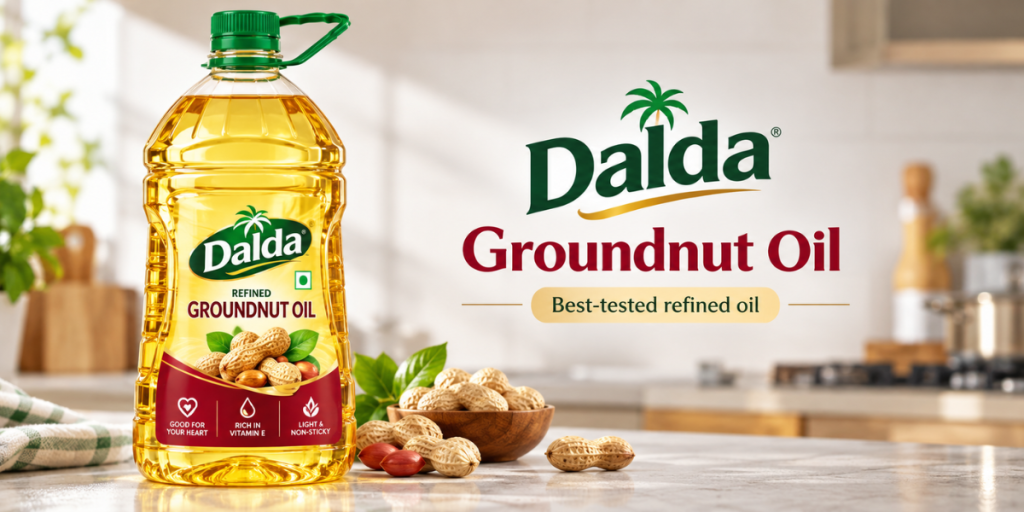
Dalda
First in refined category and first in sensory testing | Bunge
The company behind it
Dalda belongs to Bunge, the global agribusiness, which also owns Gagan in India. The Dalda name is among the oldest in Indian cooking fat, historically associated with vanaspati before the portfolio expanded into refined oils.
That history cuts both ways. It gives the brand recognition in almost every Indian household, and it also means buyers sometimes confuse the refined groundnut oil with the vanaspati product, which is a different thing entirely.
What you get
Refined groundnut oil, meaning the oil has been solvent extracted, bleached and deodorised at around 200°C. That processing strips colour, aroma and free fatty acids, which produces a neutral oil with a 227°C smoke point that fries without imposing flavour on the food.
Dalda is also widely distributed at mainstream pricing, and in Consumer VOICE’s separate mustard oil testing, it was the lowest-priced brand in the market and one of the top two performers, which suggests the value positioning is consistent across its range rather than specific to one product.
Where it placed in testing
First among refined groundnut oils in Consumer VOICE’s laboratory testing, and first in the sensory panel, where judges assessed colour, appearance, flavour, odour, visual defects, taste and overall acceptance.
Winning both the laboratory ranking and the taste panel is the strongest combined result any brand achieved. It means the oil is technically sound and people actually prefer how it cooks and tastes.
The caveat, stated plainly. Dalda also recorded the highest saturated fat of the brands tested, which is the fraction you want least of.
How to weigh that: Groundnut oil is MUFA-dominant regardless of brand, and the variation in saturated fat between brands is smaller than the difference between oil types. If you rotate oils as recommended, it matters less than if groundnut is the only oil in your kitchen.
Who it suits
Anyone who deep fries regularly and wants the best-tested refined option, anyone who cares how the oil affects the taste and smell of the finished dish, and anyone shopping on price who does not want to compromise on tested quality.
What to know before buying
Check that you are buying the refined groundnut oil rather than Dalda vanaspati, which is a far more saturated product and is not what won this testing.
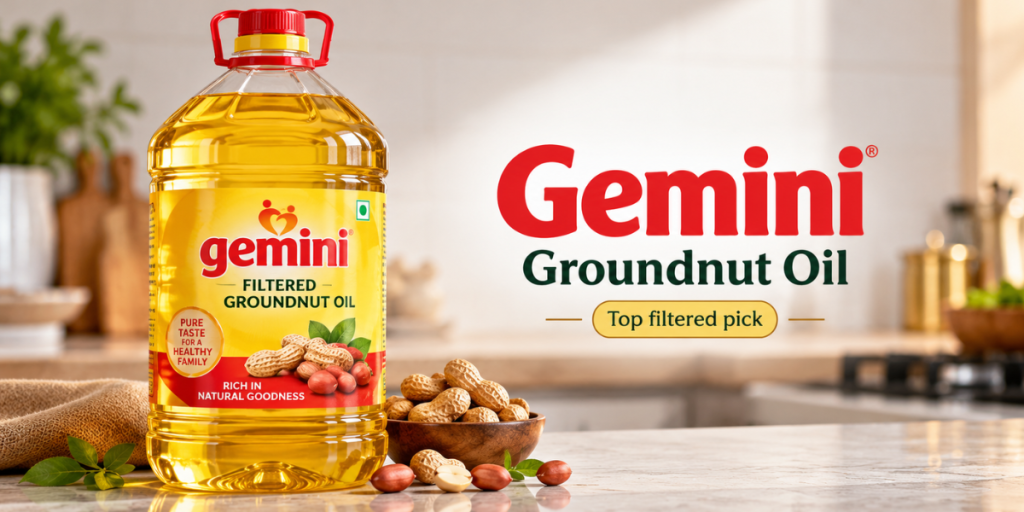
Gemini
Joint first in the filtered category | Cargill India
The company behind it
Gemini belongs to Cargill India, the Indian arm of the American agribusiness, whose portfolio also includes Nature Fresh, Sweekar, Rath and Leonardo.
Cargill’s position is worth knowing because it operates as a commodity trader and processor globally rather than a consumer marketing company, which is reflected in how its Indian brands compete: on laboratory measures rather than advertising spend.
What you get
Filtered groundnut oil, which is mechanically pressed and then filtered without any chemical refining step. That leaves more of the oil’s natural character than refining does while keeping a smoke point high enough to fry in.
Filtered is the category most Indian home cooks should actually be shopping in. It sits between cheap refined oil, which is neutral and stripped, and expensive cold-pressed oil, which cannot handle frying temperatures. It is the practical middle position, and it is under-recognised.
Where it placed in testing
Joint first among filtered groundnut oils alongside Fresh & Pure.
Gemini also placed joint first in Consumer VOICE’s separate sunflower oil testing, where it recorded the lowest saturated fat of all brands. Topping two independent product tests in different categories points to consistent quality control across the range rather than one good batch.
Who it suits
Anyone who wants unrefined character without cold-pressed pricing, anyone who fries but finds fully refined oil flavourless, and anyone who prefers to buy on test results rather than brand familiarity.
What to know before buying
Gemini has considerably lower brand awareness than its test results justify, and regional availability varies. It is a better product than its shelf presence suggests, which means you may have to look for it rather than finding it in every store.
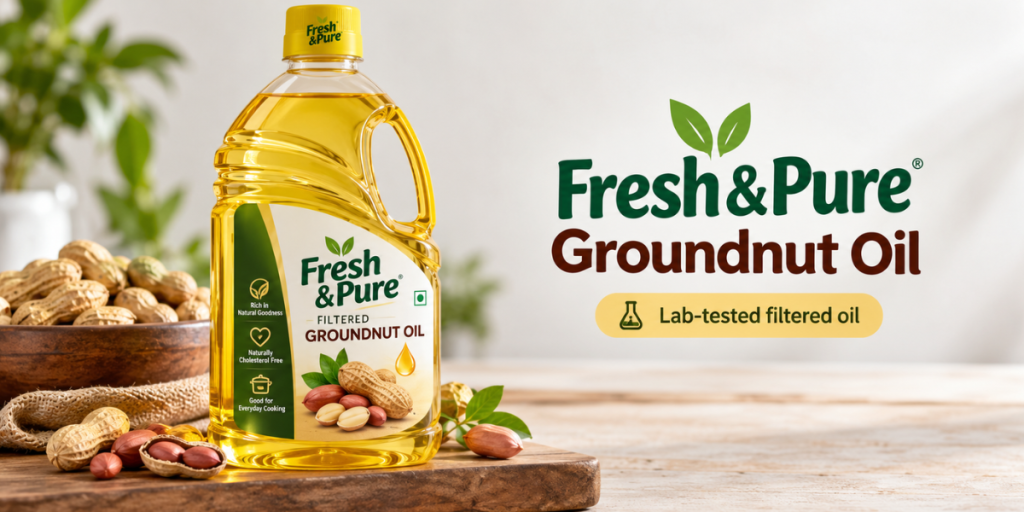
Fresh & Pure
Joint first in the filtered category
The company behind it
Fresh & Pure is a smaller brand than the national names on this list, without the distribution reach of Fortune or Dhara.
That is precisely what makes its result interesting. A lesser-known brand matching an established one under identical accredited laboratory conditions indicates the outcome comes from process quality rather than scale or marketing.
What you get
Filtered groundnut oil, mechanically pressed and filtered without chemical refining, retaining more of the nutty character and natural compounds that refining removes while remaining usable at frying temperatures.
Where it placed in testing
Joint first among filtered groundnut oils with Gemini, in Consumer VOICE’s comparative testing of 12 refined and filtered groundnut oils.
That is the entire case for including it, and it is a strong one. There is no marketing claim here, only a laboratory result.
Who it suits
Anyone who wants a lab-tested filtered groundnut oil and finds it stocked in their area, and anyone willing to try a smaller brand on the strength of independent evidence.
What to know before buying
Distribution is the main constraint rather than quality. If your local retailer does not stock it, Gemini delivers the identical test result and is more widely available.
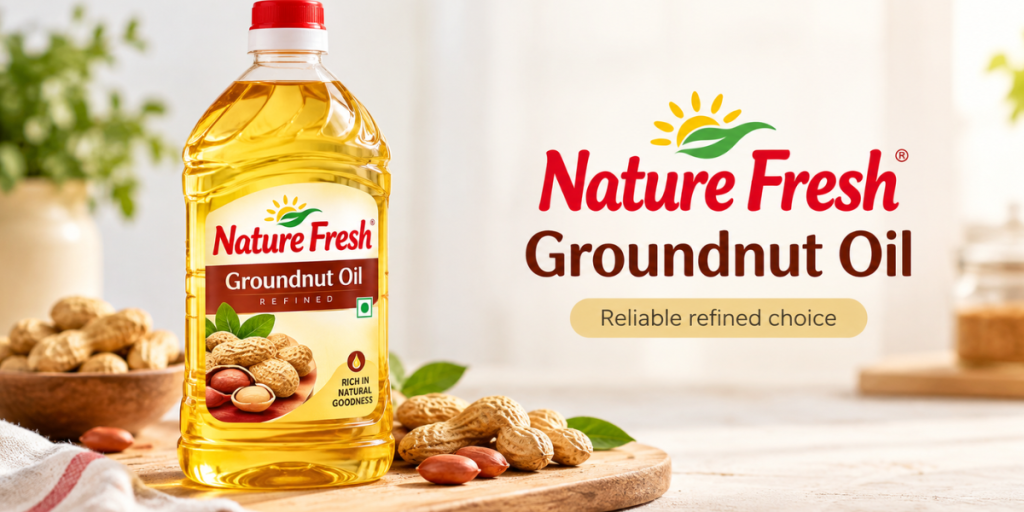
Nature Fresh
Second in refined category, best moisture control | Cargill India
The company behind it
Nature Fresh is Cargill India’s larger consumer brand, sitting alongside Gemini in the same portfolio. Its range extends beyond single-seed oils into the Acti-Lite blended oils.
What you get
Refined groundnut oil with wide national distribution, and a range that lets you move between oil types within one brand if you follow the rotation approach.
The moisture result is the technically interesting part. Nature Fresh scored highest on moisture content alongside Postman, meaning the lowest water content. That matters because water in oil accelerates rancidity and shortens shelf life. On a five-litre pack that will sit open for a month or more, low moisture is a genuine practical advantage rather than a laboratory curiosity.
Where it placed in testing
Second among refined groundnut oils, behind Dalda and ahead of Gagan, in Consumer VOICE’s testing.
Who it suits
Anyone buying larger pack sizes where shelf life matters, anyone wanting a well-tested refined oil from a widely available brand, and anyone who wants blended oils from the same brand.
What to know before buying
As a refined oil, it is neutral in flavour by design. If the nutty character groundnut oil is known for is what you want, filtered or kachi ghani is the category to shop in instead.
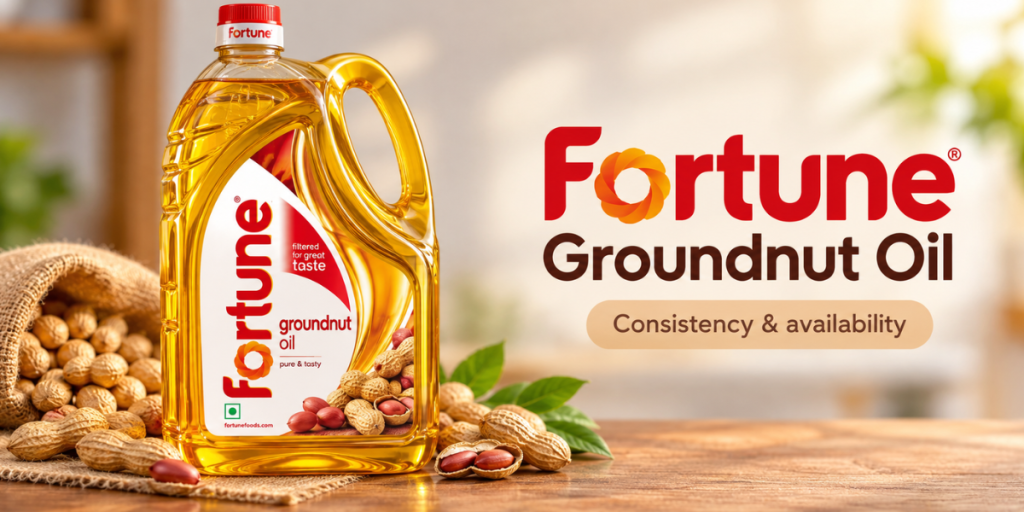
Fortune
India’s largest brand | AWL Agri Business
The company behind it
Fortune is the flagship of AWL Agri Business Limited, founded in 1999 as the Adani Wilmar joint venture and rebranded in 2025 after Adani exited the partnership. It remains India’s largest processor of edible oils, with revenue of around ₹75,148 crore.
Its portfolio also includes King’s alongside Fortune.
What you get
Both filtered and cold-pressed groundnut oil, within the widest overall oil range in India covering soybean, sunflower, mustard, rice bran, groundnut, cottonseed, palm, blended oils and vanaspati.
Fortune groundnut oil is fortified with Vitamin A and Vitamin D, confirmed on FSSAI’s fortification portal, which names groundnut among the covered Fortune variants. AWL joined the fortification programme voluntarily rather than waiting for a mandate.
Fortune groundnut oil carried an MRP of around ₹210 a litre at the last public pricing revision, which sits mid-range in the filtered band of ₹170 to ₹240.
The scale argument is real. Groundnut oil quality varies with the crop, and a processor buying at Fortune’s volume can source selectively and blend across lots so each bottle tastes like the last. Smaller producers cannot always do that, which is why oil from one batch sometimes differs noticeably from the next.
Where it placed in testing
Fortune groundnut oil was included in Consumer VOICE’s market survey of regular-selling brands. In the organisation’s separate sunflower oil comparison, it placed fourth, behind Emami, Gemini and Dhara.
Who it suits
Anyone who values batch-to-batch consistency above all, anyone who rotates oil types and wants a single brand throughout, and anyone who wants the widest availability in India.
What to know before buying
Fortune sells both filtered and cold-pressed groundnut oil under the same brand name, and they behave very differently at high heat. The packaging does not always make the distinction obvious at a glance, so check before you fry in it.
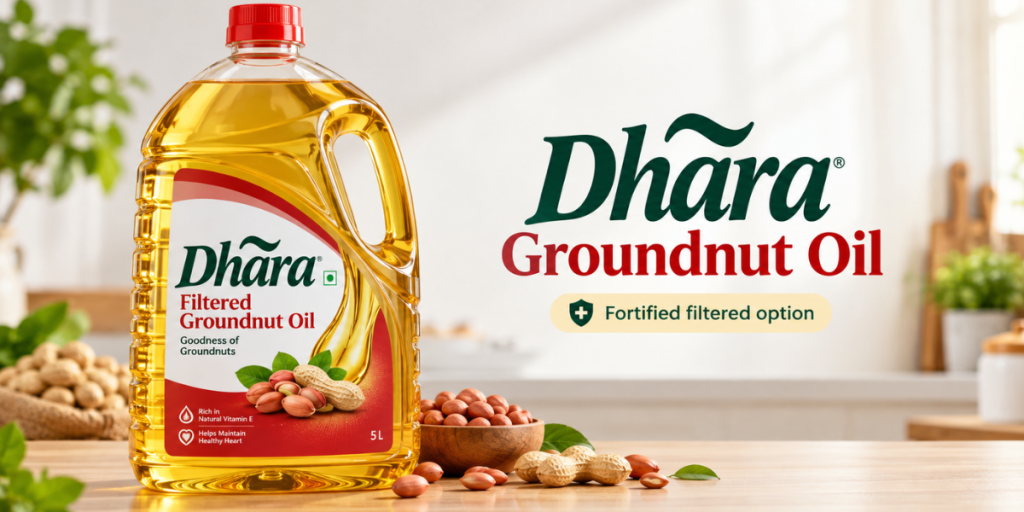
Dhara
Fortified since before it was common | Mother Dairy
The company behind it
Dhara is owned by Mother Dairy, founded in 1974 and a subsidiary of the National Dairy Development Board, the body established to develop India’s dairy and edible oil cooperatives.
That ownership structure matters in procurement. The NDDB was set up to organise agricultural supply chains, and Dhara’s sourcing runs through those established channels rather than through open-market trading alone.
What you get
Filtered groundnut oil within a range covering mustard, kachi ghani mustard, groundnut, soybean, sunflower, rice bran and refined vegetable oil.
The entire Dhara range is fortified with Vitamin A and Vitamin D, confirmed directly on FSSAI’s fortification portal, which names the filtered groundnut oil specifically. Mother Dairy adopted fortification roughly a decade before it became widespread, which is an unusual thing for a value-positioned brand to do voluntarily.
Pricing starts around ₹170 a litre depending on variant, at the lower end of the filtered band.
Where it placed in testing
Dhara groundnut oil was included in Consumer VOICE’s groundnut testing. In the organisation’s separate sunflower oil comparison, Dhara placed third overall and recorded the highest MUFA content of every brand tested.
MUFA is the fraction associated with lowering LDL cholesterol without reducing HDL, so leading on that measure in a related category is a meaningful signal about the brand’s sourcing and processing.
Who it suits
Anyone who prefers a brand under the NDDB umbrella, anyone buying groundnut oil alongside Dhara mustard, which remains the brand’s best-known product, and anyone who values fortification.
What to know before buying
Dhara is filtered rather than cold-pressed. If you specifically want an unrefined oil with pronounced aroma for tadka, Patanjali kachi ghani is the option in this list.
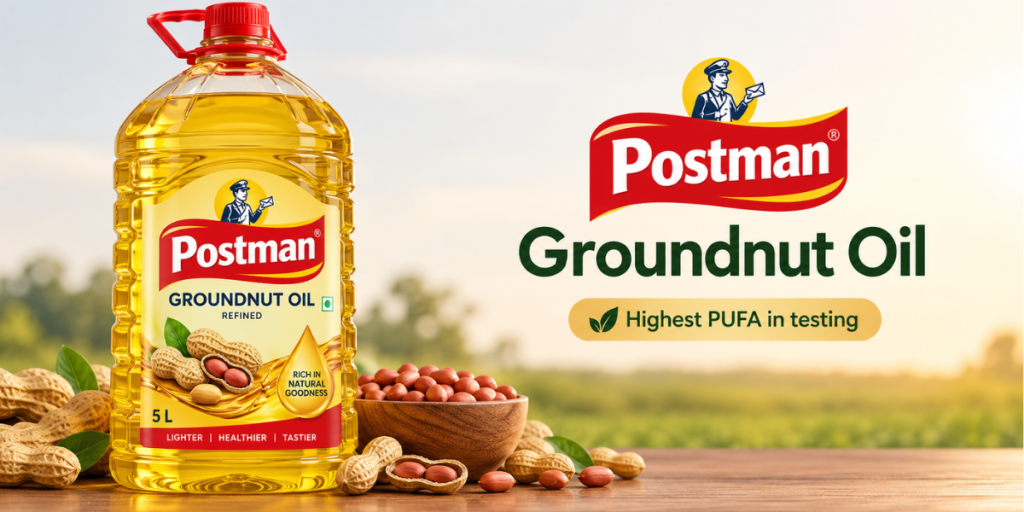
Postman
Highest PUFA content in testing
The company behind it
Postman is a long-established groundnut oil brand with deep roots in western and southern India, where groundnut oil is the everyday cooking medium rather than an alternative to something else.
It is a specialist rather than a diversified FMCG brand, which in this category is an argument in its favour. Groundnut oil is its core business rather than one line among dozens.
What you get
Refined groundnut oil with a distinct fatty acid profile from its competitors.
Postman recorded the highest PUFA content of the groundnut oils Consumer VOICE tested. Polyunsaturated fatty acids help reduce LDL cholesterol and include the essential fatty acids the body cannot produce itself.
Since groundnut oil is naturally MUFA-dominant, a brand sitting at the top of the PUFA range offers a measurably different balance from the rest of the category. It also scored highest on moisture content alongside Nature Fresh, meaning the lowest water content and therefore better resistance to rancidity.
Where it placed in testing
Included among the brands Consumer VOICE tested, leading on PUFA and on moisture control.
Who it suits
Households in Gujarat, Maharashtra and the southern states where Postman is a familiar name, and anyone wanting the PUFA-richest option among independently tested groundnut oils.
What to know before buying
Availability is regional rather than national, concentrated in western and southern India, so it may not be stocked elsewhere.
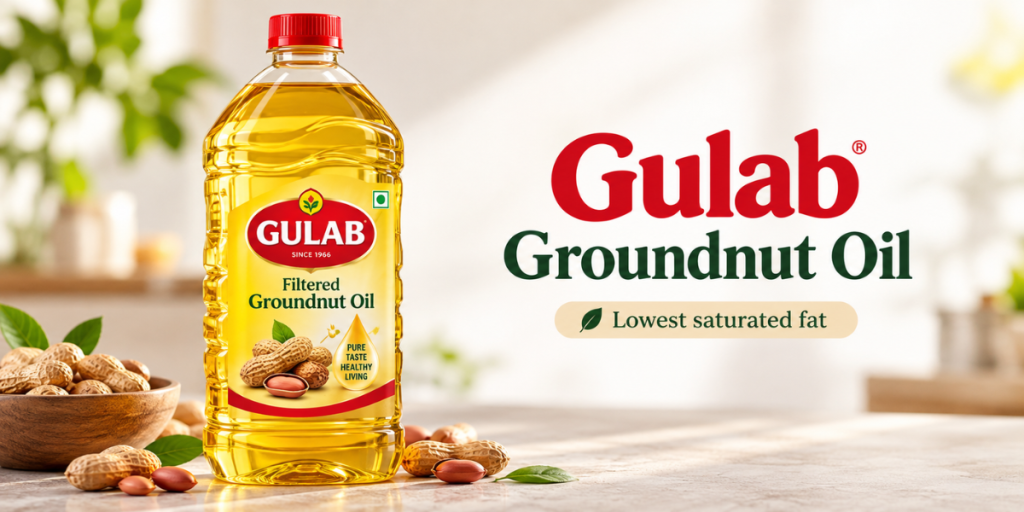
Gulab
Lowest saturated fat in testing | Gujarat specialist
The company behind it
Gulab Oil and Foods is a Gujarat company, which matters more in this category than in most.
Gujarat and Saurashtra grow a large share of India’s groundnut crop, and Gujarat, Maharashtra, Tamil Nadu, Andhra Pradesh and Rajasthan are the main groundnut oil consumption hubs in the country. A processor located inside the growing region has a shorter supply chain and more direct access to the crop, which affects freshness in an oil where freshness is measurable.
What you get
Filtered groundnut oil with the cleanest saturated fat profile in the testing, from a regional specialist rather than a national conglomerate.
Where it placed in testing
Gulab recorded the lowest saturated fat of every groundnut oil Consumer VOICE tested, which is the best possible result on the fraction you want least of.
It also recorded the lowest PUFA, which means the profile is weighted heavily towards MUFA. That is not a negative in itself, since MUFA is the fraction that lowers LDL without reducing HDL, and MUFA-dominant oils are also more oxidation-resistant than PUFA-rich ones, which is part of why groundnut oil suits frying.
Who it suits
Anyone prioritising the lowest saturated fat, households across Gujarat and western India where it is widely stocked, and anyone who prefers buying from a processor in the growing region.
What to know before buying
The lowest PUFA figure is the other side of that profile. If you want a broader fatty acid spread, Postman sits at the opposite end of the same test.
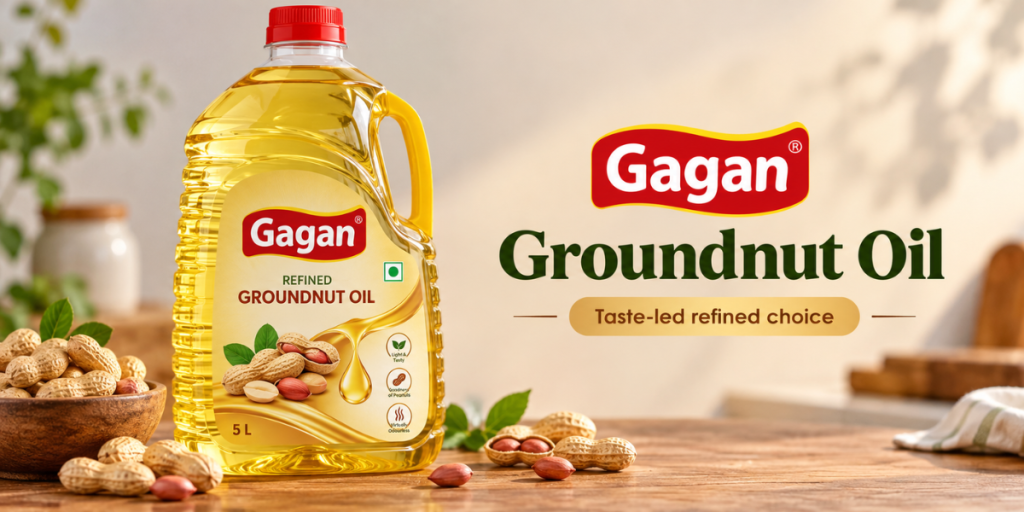
Gagan
Third in refined, second in sensory testing | Bunge
The company behind it
Gagan belongs to Bunge, the same parent as Dalda, so the two are not genuinely independent alternatives to each other. They are two brands from one processor, positioned at different points in the market.
What you get
Refined groundnut oil that performed strongly on the measure that matters most for a flavourful oil: how it actually tastes.
Where it placed in testing
Third among refined groundnut oils and second in the sensory panel, behind Dalda on both counts.
Why the sensory result carries weight here: in a neutral refined oil, taste testing tells you little. Groundnut oil is chosen partly for the character it contributes to Indian cooking, so a panel assessing colour, flavour, odour and overall acceptance is measuring something buyers genuinely care about. Placing second to Dalda and ahead of every other brand is a real result.
Who it suits
Anyone who wants sensory quality close to Dalda’s, and anyone who finds Gagan more readily available or better priced locally.
What to know before buying
Since Bunge owns both, choosing Gagan over Dalda is a choice between two products from the same company rather than a genuine diversification of suppliers.
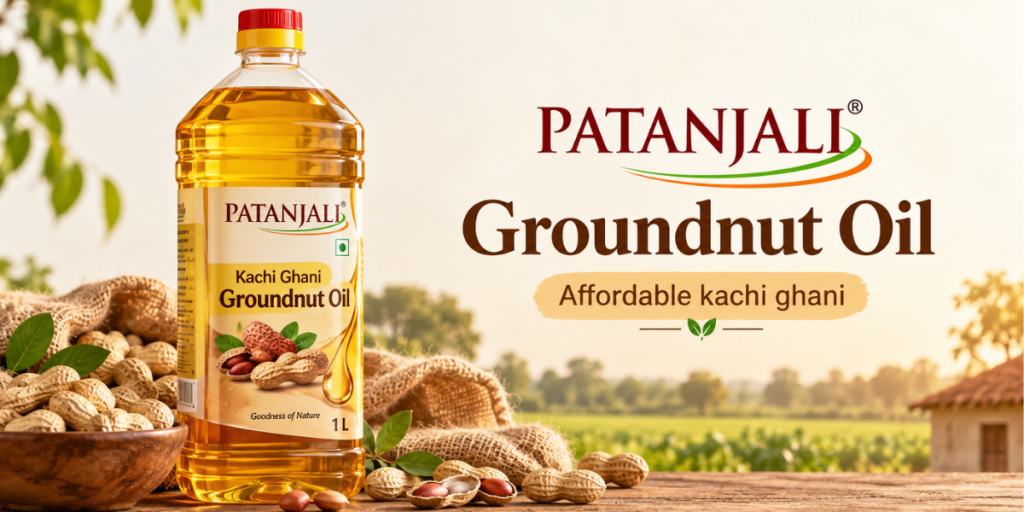
Patanjali
Most affordable kachi ghani | Patanjali Ayurved
The company behind it
Patanjali Ayurved’s edible oil range sits alongside its wider Ayurveda and FMCG portfolio, and it competes on price and traditional positioning rather than on processing technology.
Note that Patanjali Foods, formerly Ruchi Soya, is a separate and much larger entity whose brands are Nutrela, Mahakosh and Ruchi Gold. The Patanjali-branded kachi ghani oils discussed here come from the Ayurved side.
What you get
Kachi ghani groundnut oil means it is pressed at low temperature in a traditional ghani without any refining step, which preserves aroma, colour, vitamin E and the natural compounds that refining removes.
The price argument is the whole point. Cold-pressed groundnut oil typically runs ₹350 to ₹600 a litre. Patanjali brings genuine kachi ghani extraction to the lower end of that band, which makes it the most accessible route into unrefined oil in India.
Where it placed in testing
Patanjali groundnut oil was among the brands included in Consumer VOICE’s testing. In the organisation’s separate mustard oil testing, Patanjali recorded among the lowest unsaponifiable matter alongside Dalda, which is a purity measure.
Who it suits
Anyone who wants to try unrefined groundnut oil without committing ₹600, households that prefer traditional extraction to modern refining, and anyone buying oil specifically for tadka and finishing rather than frying.
What to know before buying
This is the oil the smoke point warning applies to most directly. At 160°C to 180°C, kachi ghani groundnut oil belongs in tadka, sabzi and finishing rather than a deep kadhai of puris. Using it for deep frying destroys exactly the compounds you paid the premium for.
Which Groundnut Oil Should You Buy?
| If This Describes You | Choose |
| Want the best-tested refined oil. | Dalda |
| Care how the oil tastes and smells | Dalda, or Gagan |
| Want unrefined character at a fair price | Gemini or Fresh & Pure, filtered |
| Deep fry several times a week | Any refined or filtered option |
| Want the lowest saturated fat. | Gulab |
| Want the highest PUFA. | Postman |
| Value consistency and availability above all | Fortune |
| Want fortified oil from an NDDB brand | Dhara |
| Want unrefined oil affordably. | Patanjali kachi ghani |
| Cooking tadka and finishing only | Any cold-pressed or kachi ghani option |
Highlight: The pairing most households should consider. One litre of filtered oil, such as Gemini, for frying and everyday cooking, and a 500ml bottle of cold-pressed oil for tadka and finishing. That costs less than one large bottle of cold-pressed oil used for everything, and each oil does the job it is suited to.
What to Check on the Bottle
- FSSAI licence number. Mandatory, printed as 14 digits on the label.
- The extraction method, since refined, filtered and cold-pressed oils behave very differently at heat. This is more important than the brand.
- Additional certifications. ISO 9001 and ISO 22000 cover quality and food safety management, HACCP covers hazard control, and AGMARK is the Indian agricultural grading standard.
- Lab test evidence. Better brands provide batch test reports or QR codes linking to laboratory results. GC-MS certification on packaging indicates gas chromatography testing, which is the standard method for detecting adulteration.
- Packaging. Dark glass or tins protect oil from light far better than clear plastic, and light accelerates rancidity in unrefined oils particularly.
- Pack size. Five-litre packs typically cost 8 to 12 per cent less per litre, which is around ₹110 on a ₹1,100 purchase. Buy large only in refined or filtered oil, and only if you will finish it within the best-before date; the packs Consumer VOICE tested carried 6 to 12 months.
Where to Buy and Save
Groundnut oil is bought every month, which makes it one of the few categories where small savings genuinely accumulate.
| Store | Best For |
| Amazon | Widest brand range and multi-pack pricing |
| Flipkart | Competitive grocery pricing, deepest during Big Billion Days |
| BigBasket | Ordering alongside monthly groceries |
Starting from CashKaro adds a layer that the grocery discount does not. The offer price reduces what you pay at checkout, while cashback returns a share of your spending after the order confirms, so both apply to the same purchase.
For a product bought twelve or more times a year, that difference compounds in a way a one-off discount does not. It is worth setting up once.
Three things make the cashback track. Check the current rate on the store page before you shop, click through from there rather than after filling your cart, and use only coupon codes listed on the store page.
Conclusion
Most people buy groundnut oil once and use it for everything. The bottle that fries your puris well is not the bottle that makes your tadka smell like something. That is the whole decision, and it costs less to get right than most people assume.
Frequently Asked Questions
Which is the best groundnut oil brand in India?
Consumer VOICE testing ranked Dalda first among refined oils, while Gemini and Fresh & Pure jointly led the filtered category.
Is groundnut oil safe from aflatoxin?
Consumer VOICE found no aflatoxin or adulteration in any of the brands it tested.
Which groundnut oil has the lowest saturated fat?
Gulab recorded the lowest saturated fat among the tested brands.
Which groundnut oil has the most PUFA?
Postman recorded the highest polyunsaturated fat content in Consumer VOICE testing.
Is cold-pressed groundnut oil better than refined oil?
Cold-pressed oil retains more natural flavour and compounds, while refined oil is better suited to high-heat cooking and frying.
What is the smoke point of groundnut oil?
Refined groundnut oil has a smoke point of around 227°C, while cold-pressed varieties are generally around 160°C to 180°C.
Which groundnut oil is best for deep frying?
Refined or filtered groundnut oil is generally better for deep frying because it handles higher temperatures.
What is the difference between filtered and refined groundnut oil?
Filtered oil is mechanically pressed and filtered, while refined oil undergoes additional processing to remove impurities, colour and aroma.